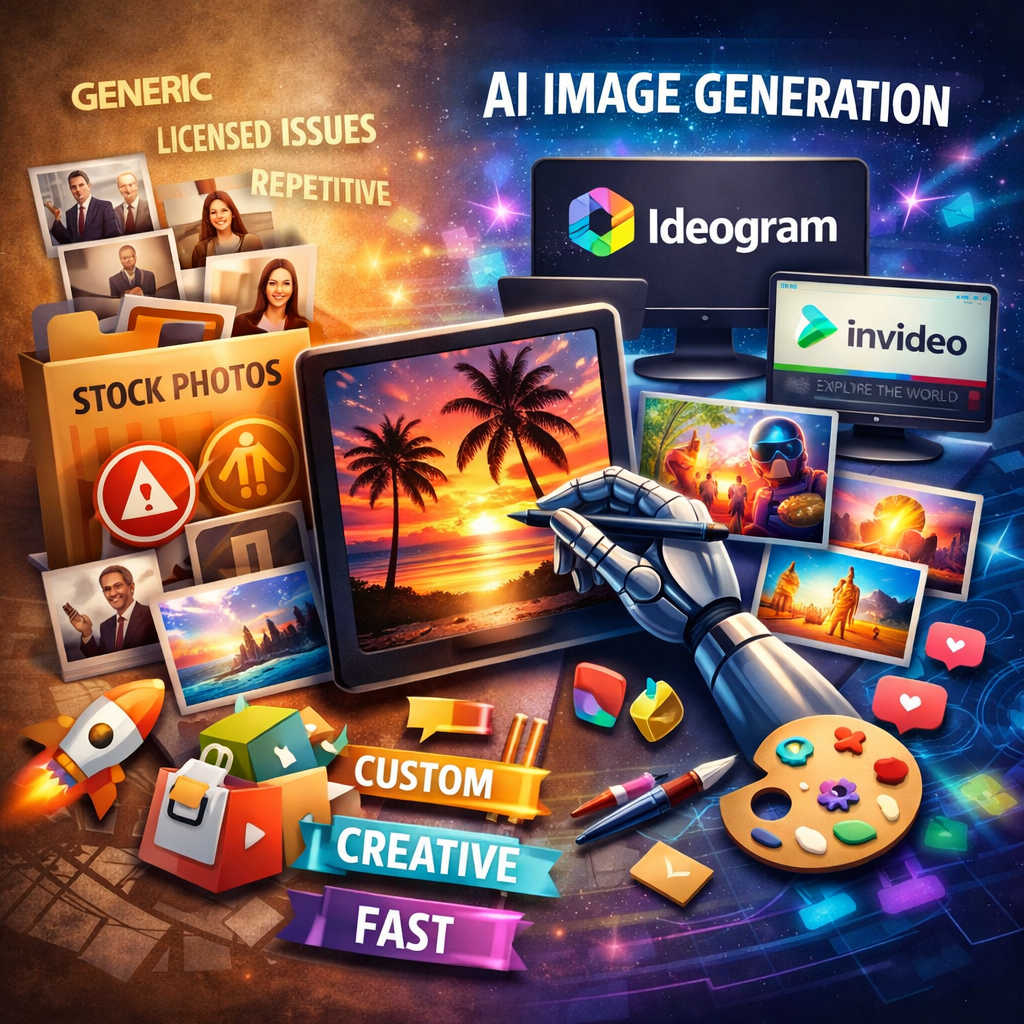
In today’s digital world, visuals are more than just decoration — they’re essential. From social media posts and blog articles to video content and marketing campaigns, compelling imagery plays a key role in capturing attention and communicating ideas. For years, stock images have served as the go-to resource for creators who need visuals fast. But while stock photo libraries offer convenience, they also come with limitations: repetitive looks, generic content, licensing restrictions, and a lack of customization.
Enter AI image generation. Tools like ideogram AI are reshaping how content creators think about visuals by enabling custom, unique image creation from text descriptions. Instead of combing through stock libraries for something “close enough,” creators can generate visuals tailored specifically to their needs. This not only frees users from the predictable look of stock photography but also enables deeper creativity, stronger brand identity, and faster production cycles.
In this article, we’ll explore how Ideogram AI reduces reliance on stock images, the benefits this shift brings, and how platforms like invideo have integrated this technology to make high-quality custom visuals accessible in a single creative workflow.
The Limitations of Traditional Stock Images
Stock images have been a staple resource for marketers, bloggers, designers, and video creators for decades. They fill a gap when original photography isn’t available — but they aren’t perfect.
1. Generic and Repetitive
Because stock libraries are open to millions of users, the same images often appear everywhere. That makes it hard for brands to stand out. Viewers can quickly recognize stock visuals that don’t match a brand’s unique identity.
2. Limited Customization
Even when you find a suitable image, modifying it to reflect your message or brand requires additional tools and design skills. Customization options are limited and often time-consuming.
3. Licensing and Legal Concerns
Using stock images responsibly requires understanding licensing terms. Misuse can lead to legal issues, especially in commercial projects.
4. Inconsistent Styles
A single project may need a cohesive visual style. Stock photos from different sources often vary in tone, lighting, and composition, making it difficult to maintain visual consistency.
Given these challenges, creators are increasingly turning to AI generative tools that allow them to create visuals from scratch, tailored to their content and audience.
What Is Ideogram AI?
Ideogram AI is an advanced text-to-image generation model that interprets text prompts and turns them into detailed, custom visuals. Instead of searching through pre-existing libraries, users can describe the visual they want — including style, mood, colors, and specific elements — and the model generates an original image that matches the description.
This ability to turn natural language into custom visuals elevates the creative process, giving users more control over final output.
How AI Image Generation Reduces Dependence on Stock Photos
AI image generation tools like Ideogram AI offer several advantages that directly address the limitations of stock images:
1. Customization on Demand
Instead of choosing from pre-made images, creators can generate visuals that are precisely tailored to their message, audience, and brand. For example, a travel blogger can prompt an AI to generate “a cozy seaside sunrise in pastel tones with silhouetted palm trees and warm light,” producing an original visual that stock libraries might never offer.
2. Infinite Variation
Need multiple related visuals for a campaign? AI image generation allows you to adjust your prompt slightly and produce multiple variations with consistent style and theme — something stock libraries rarely accommodate without manual editing.
3. Faster Production
Finding the perfect stock image can take time. With AI tools, users can generate visuals in seconds by typing a prompt. This speed is especially valuable when deadlines are tight or when multiple visual assets are needed quickly.
4. Cost-Effectiveness
While stock image subscriptions can be expensive, especially for premium libraries, AI image generation leverages a one-time cost or integrated platform pricing model. This makes it more affordable for creators who need a high volume of visuals.
5. Brand Consistency
AI tools can follow style guidelines more effectively when prompts are crafted with brand details in mind. This results in visuals that match a brand’s look and feel — something that is difficult to achieve with stock images taken by unrelated photographers.
Use Cases Where Ideogram AI Shines
AI image generation isn’t just theoretical — it works across real creative scenarios. Here are some common ways creators use Ideogram AI instead of stock photos:
Marketing Campaigns
Campaign visuals often require specific themes and messaging. AI image generation lets marketers describe exactly what they want, ensuring visuals align with messaging without resorting to generic stock content.
Social Media Graphics
Trends shift quickly on social platforms. Instead of scrolling through search results, creators can generate trending visuals that reflect real conversations and current aesthetics.
Blog and Article Illustrations
Ideal illustrations help retain reader interest. AI visuals generated from descriptive prompts often capture niche topics far more effectively than stock photos.
Brand Identity Visuals
From logo concepts to branded backgrounds, AI image generation allows brands to experiment with visuals that feel custom and unique.
Video Thumbnails
Video content thrives on persuasive thumbnails. AI tech tools allow creators to generate thumbnail visuals that match the video’s intent and context — often outperforming generic stock placeholders.
Invideo’s Integration of Ideogram AI for Direct Access
One of the most practical ways creators can use AI image generation today is through integrated creative platforms. Invideo has now integrated Ideogram AI directly into its tool, enabling users to generate custom visuals without leaving the platform.
With this integration, creators can:
- Generate AI visuals based on text prompts
- Choose visual styles and details from within the editor
- Use these visuals immediately in video projects
- Maintain a consistent creative workflow
This seamless experience significantly reduces the friction between image creation and content production. Instead of generating an image in one tool and importing it into another, users can create, edit, and produce content all in one place.
The integration supports customizable prompts, style selection, and direct application of generated visuals into various formats like video scenes, presentation frames, and social assets. This makes it easier for marketers and media teams to produce high-quality, tailored visuals without handling multiple tools.
Best Practices for Using AI Generated Images
While AI image generation is a powerful capability, creators should use it thoughtfully to maintain quality and authenticity.
1. Be Descriptive, Not Generic
The quality of AI output depends heavily on how clear and detailed your prompt is. Include adjectives related to style, mood, and composition.
2. Combine AI Images With Human Editing
AI visuals often serve as a starting point. Fine-tuning these images with subtle edits can enhance professionalism and alignment with brand standards.
3. Maintain Ethical Standards
Avoid generating visuals that misuse copyrighted material or misrepresent real people. Always ensure AI outputs align with ethical guidelines and your brand’s values.
4. Use AI to Extend Creativity, Not Replace It
AI is a tool to expand what creators can do — not a replacement for human vision. Combining human storytelling and AI visuals results in the most compelling content.
The Future of Visual Content Creation
AI image generation continues to evolve rapidly. As models become more accurate and intuitive, dependence on traditional stock libraries is likely to decrease even further. Soon, creators may find that tailored visuals generated in minutes can replace the need for stock libraries in most scenarios.
Future enhancements may include real-time collaborative image generation, deeper style control based on brand kits, and predictive visual suggestions based on audience data.
Conclusion
The rise of tools like the Ideogram AI image generator marks a significant shift in how creatives approach visual content. By producing tailored, original visuals from descriptive text, creators can reduce or even eliminate their reliance on traditional stock images.
The integration of Ideogram AI into an AI video generator like invideo further bridges the gap between visual creation and content production, enabling seamless workflows for marketers, media producers, and storytellers.
Whether you are creating a blog visual, a campaign graphic, or a compelling video thumbnail, AI-driven visuals offer faster production, greater customization, and stronger brand alignment — making stock images less essential and creative expression more limitless.