
Celebrity
Valeria Chomsky: Life, Career, Family, Legacy

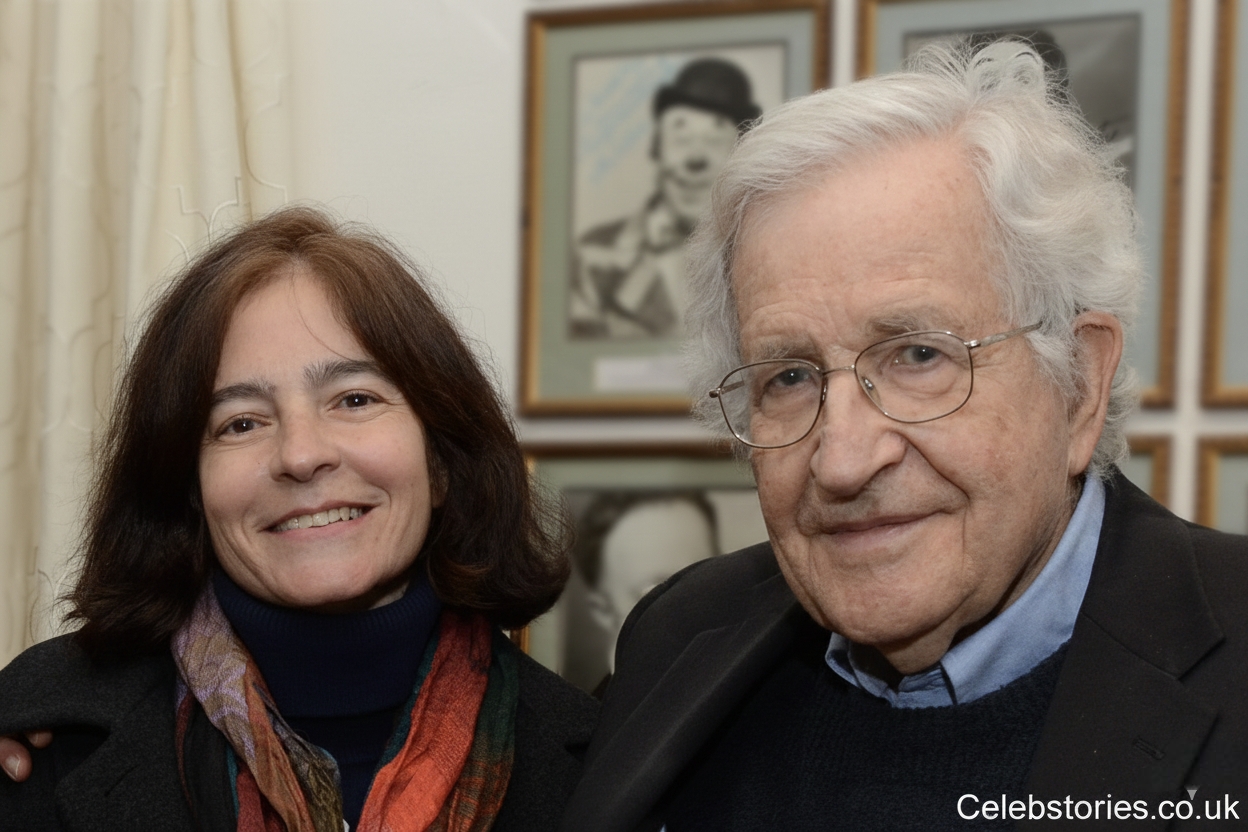
Who Is Valeria Chomsky?
Valeria Chomsky, more accurately known as Valeria Wasserman Chomsky, is a Brazilian translator and linguist who became internationally known as the second wife of renowned American scholar Noam Chomsky. Although much of the public focus rests on her husband’s towering reputation in linguistics and political thought, Valeria has quietly built her own professional identity in language, law, and cultural projects. Over time, she has emerged as a discreet but influential figure whose life bridges Brazil’s intellectual world and Chomsky’s global academic and activist networks.
Early Life And Brazilian Roots
Publicly available information on Valeria’s childhood is limited, but credible biographies consistently describe her as Brazilian, born in the 1960s and raised in an educated, middle‑class environment. Her early years in Brazil shaped both her cultural outlook and her commitment to education, with later studies in law and capital markets indicating a strong interest in the intersection of society, institutions, and economic life. This background helps explain how she later gravitated toward translation work that often sits at the crossroads of social science, environment, and public policy.
Will You Check This Article: Sened Teame: The Inspiring Journey of a Rising Star
Academic Background And Legal Training
In 1984, Valeria enrolled at Universidade Federal Fluminense in Brazil to study law, grounding herself in legal theory, regulatory frameworks, and civic institutions. She later completed a specialization in capital market analysis at the University of São Paulo in 1995, which deepened her understanding of finance, investment, and economic regulation. This combination of legal and financial training gave her a rigorous analytical toolkit that would later support both her office roles and her nuanced approach to complex translation projects.
Early Career In Law And Office Roles
Before focusing full‑time on translation, Valeria worked in a range of professional positions related to law, administration, and publishing. Biographical profiles note that she held roles such as legal claims assistant and worked with organizations including law firms, a national association of magazine publishers, and corporate offices in Brazil and the United States. These roles not only exposed her to international professional environments but also familiarized her with legal, commercial, and editorial language that later became valuable in her translation career.
Transition Into Translation And Cultural Projects
From July 2009 onward, Valeria increasingly devoted herself to translation, joining ArtVentures Cultural Projects and Translations as a professional translator. At ArtVentures, she has translated research papers, academic books, legal‑environmental studies, and institutional reports, working primarily between Portuguese and English. Her projects often deal with complex subjects such as environmental law, mining impacts, and academic research, demonstrating her ability to navigate specialized terminology and sophisticated argumentation across languages.
Areas Of Expertise As A Translator
Valeria’s translation work shows a strong emphasis on social sciences, environmental policy, and intellectual history, rather than purely commercial or literary texts. Among the works attributed to her are translations on the Atlantic rainforest law, environmental regression, religious and political analysis, and institutional histories of academic institutes, all requiring precise and context‑aware language. Her reputation in academic and cultural circles rests on quiet professionalism, careful handling of technical concepts, and an ability to make dense material accessible to new audiences.
Relationship With Noam Chomsky
Noam Chomsky married Valeria in 2014, several years after the death of his first wife, Carol Doris Schatz, with whom he had three children. Their relationship is often portrayed as a partnership grounded in intellectual affinity, emotional support, and shared concern for political and social issues, rather than celebrity or public display. Despite the substantial age gap between them, reports describe their marriage as close and mutually respectful, with time divided between the United States and Brazil.
Life Between Brazil And The United States
After Chomsky’s retirement from MIT and his later appointment at the University of Arizona, the couple’s life became increasingly transnational, reflecting ties to both North and South America. They have maintained strong connections with Brazil, where Valeria’s family and professional roots lie, and where Chomsky has developed a growing interest in the country’s politics and social struggles. Their shared time in São Paulo and other Brazilian cities underscores how her background has influenced his later engagement with Latin American issues and movements.
Support During Noam Chomsky’s Health Challenges
In June 2023, Noam Chomsky suffered a severe stroke and was later transferred to Brazil for treatment and rehabilitation, with Valeria closely accompanying him throughout this period. Reports from hospitals and news outlets indicate that he underwent care at Beneficência Portuguesa in São Paulo before being discharged to continue recovering at home, with his wife playing a central coordinating role. This phase of their life has highlighted her importance as primary caregiver, advocate, and gatekeeper of information about his condition.
Correcting False Death Rumors In 2024
In June 2024, rumors circulated widely on social media claiming that Noam Chomsky had died, prompting several outlets to publish premature obituaries that were later retracted or corrected. Valeria intervened directly by telling major news organizations, including the Associated Press and ABC News, that the reports were false, stating clearly that her husband was alive and continuing his recovery. Her calm but firm statements quickly became the authoritative source on his status, illustrating her role as the most reliable public voice for the family in moments of crisis.
Public Image And Personal Privacy
Despite being married to one of the world’s most famous intellectuals, Valeria maintains a low public profile, rarely giving interviews or appearing at high‑visibility events. Most media coverage focuses on her professional background and her supportive presence in Chomsky’s later life rather than on personal details or social media activity, which she appears to avoid. This deliberate privacy aligns with Chomsky’s own discomfort with celebrity culture and reflects a shared preference for substance over spectacle.
Influence On Chomsky’s Engagement With Brazil
Observers note that Chomsky’s engagement with Brazilian politics, including his criticism of Jair Bolsonaro and solidarity with former president Luiz Inácio Lula da Silva, has deepened during his relationship with Valeria. Their shared residence in Brazil and her familiarity with local culture have likely facilitated his access to Brazilian activists, intellectuals, and political figures, broadening his already global network of contacts. This dynamic shows how her background has subtly shaped the geographical and thematic focus of his later public interventions.
Intellectual Partnership And Shared Values
While Valeria does not present herself as a public intellectual in the same way as her husband, their marriage is frequently described as a meeting of minds as well as of hearts. Her work with complex academic texts and her exposure to legal, economic, and environmental debates provide a foundation for meaningful conversation and mutual learning in their private life. Their partnership appears grounded in shared commitments to social justice, critical inquiry, and international solidarity, even if expressed through different professional paths.
Personal Traits And Working Style
Profiles and colleagues portray Valeria as disciplined, detail‑oriented, and modest, preferring to let her work speak for itself rather than pursuing a public persona. In translation, this shows up as meticulous attention to nuance, tone, and context, especially when handling dense environmental and policy‑related material that must remain both accurate and readable. Her approach to public communication—measured, precise, and minimal—can be seen clearly in her brief but decisive responses to the false death reports about Chomsky.
Legacy And Ongoing Relevance
Valeria Chomsky’s legacy is still unfolding, but several strands are already visible: her contribution to Brazilian and international scholarship through translation, her bridging role between Brazilian and Anglo‑American intellectual worlds, and her influence on the final decades of Noam Chomsky’s public life. By ensuring that complex research reaches wider audiences and by supporting an aging but still influential thinker, she participates in shaping contemporary debates on democracy, environment, and human rights, even while staying largely outside the spotlight. As interest grows in the people behind prominent public figures, her story offers an example of how quiet work and steadfast support can carry far‑reaching effects.
Conclusion
Valeria Chomsky stands at the intersection of translation, law, and global intellectual life, yet she chooses a path of discretion rather than celebrity. Her evolution from Brazilian law student and office professional to respected translator and partner of one of the world’s best‑known thinkers illustrates how behind‑the‑scenes figures can shape public history in subtle but important ways. Through her professional projects, cross‑cultural role, and steadfast support during Noam Chomsky health challenges and media crises, she has quietly become an essential part of the story of contemporary critical thought.
FAQs About Valeria Chomsky
Who is Valeria Chomsky?
Valeria Chomsky (Valeria Wasserman Chomsky) is a Brazilian translator and linguist, best known as the second wife of American scholar Noam Chomsky. She has a professional background in law, capital markets, and translation for academic and cultural projects.
What is Valeria Chomsky’s educational background?
She studied law at Universidade Federal Fluminense in Brazil and later completed a specialization in capital market analysis at the University of São Paulo. This education underpins her understanding of legal, financial, and policy‑oriented texts that she often translates.
When did Valeria Chomsky marry Noam Chomsky?
Valeria married Noam Chomsky in 2014, several years after the death of his first wife, Carol. Since then, the couple has divided their time between the United States and Brazil, reflecting their shared personal and professional ties in both countries.
What kind of translation work does she do?
Her work focuses largely on academic and institutional texts, including research on environmental law, mining impacts, religion, and the social sciences, translated between Portuguese and English. These projects demand careful handling of technical language and complex arguments, strengthening her reputation in scholarly circles.
How did she respond to false reports of Noam Chomsky’s death?
In June 2024, when rumors wrongly claimed that Noam Chomsky had died, Valeria contacted major news outlets and stated clearly that the reports were false. Her brief confirmation that he was alive and recovering in Brazil prompted numerous publications to correct or retract their premature obituaries.

The luxury real estate market has undergone quite a transformation lately, with high-net-worth individuals and celebrities searching for unique amenities that push their properties well beyond traditional expectations. Among the most coveted features in upscale residential properties, indoor putting greens have emerged as a premium addition that seriously impacts property valuation. These sophisticated installations aren’t just recreational features, they’re lifestyle statements that resonate with discerning buyers who appreciate both functionality and exclusivity.
The Premium Appeal of Exclusive Home Amenities
Celebrity homes have long set the bar for luxury living, with unique features that separate exceptional properties from merely expensive ones. Indoor putting greens occupy a special position in this hierarchy of desirable amenities, offering year, round accessibility regardless of weather conditions or seasonal shifts. The privacy factor can’t be overstated, high-profile individuals genuinely value the ability to practice and entertain without public scrutiny or the hassle of visiting external facilities. What’s more, these installations demonstrate a commitment to wellness and active living that aligns perfectly with contemporary lifestyle trends among affluent buyers.
Quantifiable Impact on Property Valuation
The financial implications of installing an indoor putting green extend far beyond the initial investment, with measurable returns that absolutely justify the expense for property owners. Luxury real estate studies indicate that unique recreational amenities can increase property values by fifteen to twenty, five percent, depending on installation quality and overall property caliber. Indoor putting greens typically cost between twenty thousand and one hundred thousand dollars to install, yet they can contribute several hundred thousand dollars to the final sale price of multi-million dollar estates.
Architectural Integration and Design Sophistication
High-end installations often incorporate climate control systems that maintain ideal temperature and humidity levels, preserving both the putting surface and surrounding finishes. The most sophisticated designs include strategic placement within the home, often utilizing spaces such as finished basements, converted garages, or purpose-built additions that maximize privacy while maintaining convenient access. Attention to acoustic treatments ensures that the space remains peaceful and conducive to concentration, while also preventing sound transmission to other areas of the residence where family members may be engaged in different activities. These thoughtful design considerations separate amateur installations from truly professional ones that add genuine value to luxury properties.
Entertainment and Networking Value for High-Profile Owners
Beyond personal enjoyment, indoor putting greens serve as powerful entertainment venues that facilitate relationship, building among celebrity networks and business associates. These spaces create memorable experiences for guests while maintaining the controlled environment that high-profile individuals require for their social gatherings. Professional athletes particularly value the training advantages, allowing them to maintain their skills during off-seasons or when travel schedules make golf course access challenging.
When hosting informal business meetings or private entertainment events, a custom indoor putting green provides the relaxed atmosphere where deals progress naturally away from formal conference rooms. The networking potential translates directly into property value, as buyers recognize these spaces as functional business assets rather than purely recreational luxuries. Celebrity real estate agents emphasize that homes with distinctive entertainment features sell faster and to more qualified buyers who understand the lifestyle advantages these amenities provide.
Market Differentiation in Competitive Luxury Segments
In saturated luxury real estate markets where multiple properties offer similar square footage, locations, and standard amenities, unique features become critical differentiators that capture buyer attention. Indoor putting greens immediately distinguish listings in crowded marketplaces, generating increased showing requests and media attention that amplifies property visibility. Marketing materials featuring these specialized installations create compelling visual content that performs exceptionally well across digital platforms and social media channels.
Long-Term Value Retention and Market Trends
The sustainability of value enhancement from indoor putting greens depends on quality construction, proper maintenance, and alignment with evolving luxury market preferences. High-quality installations utilizing premium materials and professional-grade synthetic surfaces maintain their appeal and functionality for decades with minimal upkeep. Market analysis reveals that golf-related amenities have demonstrated consistent desirability across multiple economic cycles, suggesting resilient value retention compared to trendy features that quickly become dated.
Conclusion
As the high-end real estate market continues evolving toward experiential living spaces, properties featuring thoughtfully designed indoor putting greens will maintain their competitive advantages and command premium valuations. Whether viewed as personal retreats, training facilities, or networking venues, these installations deliver measurable returns that justify their investment while providing years of enjoyment and utility for discerning property owners who demand excellence in every aspect of their residential environments.

Emily Threlkeld has lived much of her life away from the spotlight—yet somehow, her presence has always been felt within it. Known for her elegance, quiet strength, and unwavering loyalty, she represents a rare kind of public figure: someone deeply connected to power and influence, but grounded in privacy and grace. While many recognize her as the wife of former U.S. politician Harold Ford Jr., Emily Threlkeld’s story extends far beyond that title. It is a story of intelligence, resilience, and a life carefully balanced between public attention and personal authenticity.
Quick Bio
| Attribute | Details |
|---|---|
| Full Name | Emily Frances Threlkeld |
| Nickname | Emily |
| Date of Birth | January 2, 1981 |
| Age | 45 years (as of 2026) |
| Birthplace | Naples, Florida, USA |
| Hometown | Naples, Florida |
| Nationality | American |
| Religion | Christianity (not publicly emphasized) |
| Profession | Businesswoman, former publicist |
| Current Residence | New York City, USA |
| Education | University of Miami |
| College | University of Miami |
| Zodiac Sign | Capricorn |
| Height | 5 feet 4 inches (163 cm) |
| Weight | Approx. 55 kg (121 lbs) |
| Eye Color | Blue |
| Hair Color | Blonde |
| Relationship Status | Married |
| Spouse | Harold Ford Jr. |
| Children | 2 |
| Parents | Deborah Beard (mother) |
| Siblings | Not publicly known |
| Hobbies | Fashion, traveling, reading |
| Known For | Being the wife of Harold Ford Jr., professional background in PR |
| Career Start | Early 2000s |
| Current Status | Private life, occasional public appearances |
| Social Media | Not publicly active |
| Estimated Net Worth | $2–3 million (combined influence considered higher) |
Early Life and Background of Emily Threlkeld
Emily Threlkeld was born into a modest yet culturally rich environment in Naples, Florida. Her upbringing was not one of political prominence or celebrity influence, but rather one shaped by discipline, values, and a strong sense of individuality. Raised primarily by her mother, Deborah Beard, Emily learned early on the importance of independence and resilience.
People Read this one also: carlos alman
Growing up in Florida, she was surrounded by a lifestyle that blended coastal serenity with social sophistication. This duality later became a defining trait of her personality—effortlessly balancing calm composure with social intelligence. Friends and acquaintances from her early years often describe her as thoughtful, observant, and quietly ambitious.
While she did not grow up in the public eye, Emily always carried a certain presence. It wasn’t loud or attention-seeking, but rather refined and confident. These qualities would later help her navigate life alongside a high-profile political figure without losing her own identity.
Education Journey and Academic Life
Emily Threlkeld pursued her higher education at the University of Miami, an institution known for nurturing both academic and social growth. During her time there, she developed a strong interest in communication, public relations, and business—fields that aligned naturally with her personality.
Her college years were instrumental in shaping her worldview. She was not just focused on academics but also immersed herself in social and cultural environments that enhanced her interpersonal skills. These experiences played a crucial role in preparing her for a future that would demand both discretion and diplomacy.
Unlike many who chase recognition, Emily’s approach to education was rooted in self-development rather than external validation. She understood the value of knowledge not just as a tool for career advancement, but as a foundation for navigating complex social dynamics.
Career and Rise to Professional Recognition
Before becoming widely known through her marriage, Emily Threlkeld had already built a respectable career in public relations. She worked in the fashion and communications industry, collaborating with brands and personalities that required a keen sense of image management and storytelling.
Her role as a publicist allowed her to operate behind the scenes, shaping narratives and managing reputations. It was a profession that perfectly suited her personality—strategic, composed, and detail-oriented. She wasn’t the face of the brand, but often the mind behind its presentation.
Emily’s career trajectory reflects a pattern of quiet success. She never sought the spotlight, yet consistently positioned herself in spaces where influence mattered. This balance between visibility and privacy would later define her public image.
Personal Life and Relationship with Harold Ford Jr.
Emily Threlkeld’s life took a significant turn when she met Harold Ford Jr., a prominent American politician and financial executive. Their relationship quickly gained public attention, not just because of Ford’s political stature, but also due to the cultural and social dynamics surrounding their union.
The couple married in 2008 in a private yet elegant ceremony in Miami. Their wedding was attended by notable figures from politics, business, and society, reflecting the circles they both moved in. Despite the attention, Emily maintained her characteristic grace, choosing to keep the focus on the relationship rather than the spectacle.
Their marriage is often described as a partnership built on mutual respect and understanding. Emily has played a supportive yet independent role, standing beside her husband through various phases of his career while maintaining her own identity.
Family Details and Private Life
Emily and Harold Ford Jr. are parents to two children, and their family life remains largely private. In an era where public figures often share every aspect of their lives, Emily’s decision to protect her family’s privacy is both intentional and admirable.
Her role as a mother is central to her life. Those close to the family often highlight her dedication to creating a stable and nurturing environment for her children. She prioritizes values such as education, empathy, and humility—qualities she herself embodies.
While details about her extended family remain limited, it is clear that Emily values close-knit relationships and meaningful connections over public exposure.
Lifestyle and Personality
Emily Threlkeld’s lifestyle reflects a blend of sophistication and simplicity. Living in New York City, she is surrounded by one of the world’s most dynamic environments, yet she manages to maintain a sense of calm and balance.
Her fashion sense is often noted for its elegance and understatement. She favors classic styles over fleeting trends, reflecting a personality that values timelessness over temporary appeal. Whether attending public events or private gatherings, Emily carries herself with a quiet confidence that leaves a lasting impression.
Personality-wise, she is often described as introspective, intelligent, and composed. She listens more than she speaks, observes more than she reacts, and chooses her moments carefully. This measured approach to life has allowed her to navigate complex social and public landscapes with ease.
Achievements and Milestones
While Emily Threlkeld may not have a long list of public accolades, her achievements lie in the impact she has made through her roles and choices. Building a successful career in public relations, maintaining a strong family foundation, and supporting a high-profile partner are accomplishments that require strength and skill.
Her ability to remain grounded despite being connected to power and influence is, in itself, a significant achievement. She represents a form of success that is not measured by headlines, but by stability, integrity, and personal fulfillment.
Net Worth and Income Sources
Emily Threlkeld’s estimated net worth is believed to be between $2 million and $3 million. This figure primarily reflects her professional career in public relations and business-related ventures.
However, when considered alongside her husband’s financial success, the couple’s combined net worth is significantly higher. Harold Ford Jr.’s career in politics, finance, and media has contributed to a substantial financial portfolio.
Emily’s approach to wealth appears to be practical rather than extravagant. She values financial stability and long-term security over flashy displays of affluence. This mindset aligns with her overall personality—measured, thoughtful, and grounded.
Legacy, Influence, and Quiet Impact
Emily Threlkeld’s story is not one of loud success or constant visibility. Instead, it is a narrative of quiet influence and meaningful presence. She has managed to carve out a space for herself in a world that often demands attention and exposure, without compromising her values.
Her influence is subtle but significant. She represents a different kind of modern woman—one who supports, leads, and thrives without needing constant recognition. In many ways, her life challenges the idea that visibility equals importance.
Conclusion
Emily Threlkeld’s journey is a reminder that not all impactful lives are lived in the spotlight. Sometimes, the most powerful stories are the ones told quietly, through actions rather than words. From her early days in Florida to her life in New York, from her career in public relations to her role as a wife and mother, Emily has consistently chosen authenticity over attention.
She stands as a symbol of grace in a world that often values noise, proving that strength does not always need to be seen to be felt. Her life is not just about who she is connected to, but about who she has chosen to be—calm, composed, and undeniably influential in her own right.
FAQs
Who is Emily Threlkeld?
Emily Threlkeld is an American businesswoman and former publicist, widely known as the wife of Harold Ford Jr. She has maintained a private yet influential presence.
What does Emily Threlkeld do for a living?
She previously worked in public relations and fashion-related industries. Currently, she focuses more on her family and private life.
How did Emily Threlkeld meet Harold Ford Jr.?
They met through mutual social and professional circles. Their connection grew quickly, leading to marriage in 2008.
Does Emily Threlkeld have children?
Yes, she has two children with Harold Ford Jr. Their family life is kept largely private.
What is Emily Threlkeld’s net worth?
Her individual net worth is estimated between $2–3 million. Combined with her husband, their financial standing is significantly higher.
Read More About: Celebstories.co.uk

Introduction
In the world of celebrity culture, parents of famous figures are often pulled into the spotlight whether they seek it or not. Some embrace public attention, while others remain distant, allowing their children to define their own stories. carlos alman belongs firmly to the latter group. Though widely recognized as the father of global rap icon Cardi B, he has consistently maintained a private life, rarely stepping into interviews or public narratives. Yet behind the global success story of his daughter lies a quieter, more grounded story—one shaped by immigration, cultural identity, labor, and family resilience.
Understanding carlos alman means looking beyond tabloid curiosity. It requires examining the environment that shaped his family, the cultural traditions he carried from the Caribbean, and the understated influence he had in raising one of music’s most outspoken and confident personalities. His life is not defined by fame but by fatherhood, heritage, and a deliberate choice to stay away from public spectacle.
Here is a clean, SEO-friendly Quick Bio table for Carlos Alman that you can directly use:
Quick Bio
| Attribute | Details |
|---|---|
| Full Name | Carlos Alman |
| Nickname | Not publicly known |
| Date of Birth | 1958 (approx.) |
| Age | Around 67 years (as of 2025) |
| Birthplace | Dominican Republic |
| Hometown | Bronx, New York, USA |
| Nationality | Dominican-American |
| Ethnicity | Latino |
| Religion | Not publicly disclosed |
| Profession | Former Taxi Driver |
| Famous For | Being Cardi B’s Father |
| Current Residence | New York, USA |
| Education | Not publicly available |
| School/College | Not publicly available |
| Zodiac Sign | Not confirmed |
| Height | 5 feet 8 inches (173 cm) |
| Weight | Approx. 75 kg |
| Eye Color | Dark Brown |
| Hair Color | Black (graying) |
| Marital Status | Divorced |
| Ex-Spouse | Clara Almánzar |
| Children | Cardi B (Belcalis Marlenis Almánzar), others |
| Parents | Not publicly known |
| Siblings | Not publicly known |
| Hobbies | Spending time with family, music |
| Career Start | Taxi Driving in New York |
| Current Status | Retired / Private Life |
| Social Media | Not active |
| Estimated Net Worth | $200,000 – $500,000 |
Early Life and Dominican Roots
carlos alman was born in the Dominican Republic, a nation rich in culture, music, and tightly woven family bonds. Like many Dominicans who migrated during the late twentieth century, he came to the United States seeking economic opportunity and stability. Migration from the Caribbean during that period was often driven by limited job prospects and political uncertainties, and countless families made the difficult decision to rebuild their lives abroad.
Will You Check This Article: lori brice: Life Beyond the Comedy Spotlight A Quiet Legacy
While specific details about his childhood remain largely private, what is clear is that his upbringing was shaped by traditional Dominican values—strong respect for elders, dedication to family, and pride in cultural heritage. These values would later become central to the household he helped build in America.
Moving to the United States was not simply a geographical shift; it was a transformation of identity. For immigrants like carlos alman, adjusting to a new country meant navigating language barriers, cultural differences, and economic hardship. Yet those struggles often instilled resilience and determination—traits that quietly influenced the next generation.
Building a Life in New York
After arriving in the United States, carlos alman settled in New York City, a metropolis known for its diversity and relentless pace. He found work as a taxi driver, a profession that has long been a cornerstone for immigrant communities in the city. Driving a cab in New York is not simply a job; it is an endurance test. Long hours, unpredictable income, and the constant motion of the city define daily life behind the wheel.
Working as a taxi driver provided stability but required sacrifice. Shifts often extended late into the night, and weekends rarely offered rest. For many immigrant parents, this was the trade-off: less time at home in exchange for financial security and opportunity for their children.
The neighborhood environment where he raised his family was far from glamorous. It was diverse, working-class, and sometimes challenging. Yet it was also vibrant and culturally rich, blending Caribbean, Latino, and urban American influences. This environment would later become a defining backdrop for his daughter’s artistic voice.
A Multicultural Household
One of the most distinctive elements of carlos alman’s family life was its multicultural composition. His wife, Cardi B’s mother, is from Trinidad and Tobago. This created a household that blended Dominican and Trinidadian traditions, languages, food, music, and storytelling.
Growing up in such an environment meant exposure to multiple Caribbean identities. Spanish and English mixed naturally in conversation. Music from different islands filled the home. Food traditions carried ancestral memory. Cultural pride was not theoretical—it was lived daily.
The presence of two strong Caribbean backgrounds likely gave his children a layered understanding of identity. They were American by birth but deeply connected to island heritage. This duality would later surface powerfully in Cardi B’s public persona, where she often references her Dominican and Trinidadian roots with pride and authenticity.
carlos alman may not have stood in front of cameras discussing cultural philosophy, but by preserving his heritage within the household, he contributed to shaping a strong sense of identity in his children.
Fatherhood and Personal Values
Publicly, little is known about the day-to-day parenting style of carlos alman. However, available interviews from his daughter suggest that discipline and structure were part of her upbringing. Like many immigrant fathers working physically demanding jobs, he reportedly emphasized respect, education, and responsibility.
In households built on sacrifice, expectations are often high. Parents who immigrate frequently want their children to achieve more stability and recognition than they themselves had. That desire can manifest as strictness or firm guidance. While Cardi B has openly discussed both challenges and tensions within her upbringing, she has also acknowledged the hard work her parents invested in raising their family.
Fatherhood, especially within immigrant families, often takes on a quiet strength. It is less about public affection and more about provision. carlos alman worked consistently, ensuring that his household functioned. That consistency forms a foundation that is easy to overlook but impossible to replace.
Privacy in the Age of Fame
When Cardi B rose to international fame through reality television and later music, media attention naturally extended to her family. Yet carlos alman did not transform into a public figure. He did not appear frequently in interviews. He did not seek social media visibility. He did not leverage his daughter’s fame for recognition.
This choice is significant. In an era where relatives of celebrities often monetize association, remaining private requires intention. It reflects a preference for normalcy over notoriety. While public curiosity about him continues, his distance from media attention suggests that he values personal boundaries over public exposure.
That separation has allowed him to maintain dignity and autonomy. Rather than being defined by headlines, he remains defined by his life as a working immigrant father.
Influence on Cardi B’s Identity
To understand the subtle influence of carlos alman, one must look at the confidence and directness that characterize his daughter’s personality. Cardi B often speaks with unapologetic honesty about her upbringing, her Bronx roots, and her Caribbean identity. That confidence did not emerge in isolation.
Growing up in a household led by hardworking immigrant parents creates a particular mindset. There is awareness of struggle. There is appreciation for sacrifice. There is resilience developed through witnessing effort. Even when disagreements or generational gaps exist, foundational lessons about perseverance remain embedded.
carlos alman’s background in the Dominican Republic also connects directly to the rhythms and cultural expressions that surface in his daughter’s music and public persona. Caribbean influence runs deep in her speech patterns, humor, and pride. Identity is never accidental; it is cultivated within the home.
Though he may not have influenced her musical direction directly, the emotional architecture of resilience and self-belief can often be traced to family foundations.
Separation and Family Dynamics
Like many families, the relationship between carlos alman and Cardi B’s mother eventually changed. Reports indicate that the couple separated when their children were young. Family transitions inevitably shape childhood experiences, introducing both emotional complexity and independence.
Yet separation does not erase parental presence. Even when households restructure, parental influence continues in various forms. Navigating change at a young age can strengthen adaptability and self-reliance—traits that Cardi B frequently displays in her career decisions and public interactions.
Family dynamics are rarely simple, particularly in immigrant households balancing work demands and financial pressure. Understanding carlos alman within this context means acknowledging both sacrifice and imperfection. Parenthood is rarely linear, and growth often emerges from navigating difficulty.
The Meaning of Legacy
Legacy does not always mean wealth or fame. For carlos alman, legacy may lie in something more understated: the success and confidence of his children, the preservation of cultural identity, and the demonstration of hard work through consistent labor.
Taxi driving may not capture headlines, but it represents endurance and commitment. The willingness to work long hours to provide for family creates opportunities that ripple across generations. Without that foundation, many stories of success would look very different.
There is also dignity in choosing privacy. In resisting the temptation of celebrity adjacency, carlos alman defines his own narrative rather than allowing media narratives to define him.
Cultural Representation and Broader Context
The story of carlos alman resonates beyond celebrity curiosity because it reflects a broader immigrant experience. Across the United States, countless parents from the Caribbean, Latin America, Asia, and Africa build lives in working-class professions so their children can access broader possibilities.
Their names rarely trend online. Their sacrifices rarely become documentaries. Yet their impact shapes industries, art, science, and culture through the achievements of the next generation.
By examining his life, one gains insight into the quiet architecture behind many public success stories. Fame often rests on invisible scaffolding constructed by parents who never sought recognition.
Conclusion
carlos alman may not headline award shows or give viral interviews, but his presence in the story of one of the most influential rappers of the modern era is undeniable. As a Dominican immigrant, a taxi driver in New York City, and a father navigating the complexities of family life, he represents a familiar yet often overlooked narrative: the quiet strength of immigrant parenthood.
His life underscores how cultural identity, discipline, resilience, and hard work shape children in ways that are not always visible on stage but are deeply embedded beneath it. While the world celebrates Cardi B’s boldness and success, it is worth remembering that such confidence is rarely born in isolation. It grows in homes where parents labor quietly, protect their heritage, and endure challenges so their children can dream bigger.
In that sense, carlos alman’s legacy is not loud, but it is lasting.
FAQs
Who is carlos alman?
carlos alman is best known as the father of rapper Cardi B. He is a Dominican immigrant who worked as a taxi driver in New York City and has largely remained out of the public spotlight despite his daughter’s fame.
Where is carlos alman from?
He was born in the Dominican Republic and later immigrated to the United States, where he built his life and raised his family.
What did carlos alman do for a living?
He worked as a taxi driver in New York City, a common profession among immigrant communities seeking financial stability and flexible employment opportunities.
Is carlos alman involved in the entertainment industry?
No, he has not pursued a public or entertainment career. He has maintained a private life and has not actively participated in media or celebrity platforms.
What influence did carlos alman have on Cardi B?
While not publicly vocal about his role, his immigrant background, work ethic, and cultural heritage contributed to shaping the environment in which Cardi B developed her identity, resilience, and strong sense of cultural pride.
-
Business1 week ago
Newstown CraigScott Capital: Truth, Transparency, and Cautionary Insights
-

 Business1 week ago
111.901.50.204 Explained: The Truth Behind It Format Mystery
-

 Celebrity1 week ago
How a Custom Indoor Putting Green Enhances Celebrity Real Estate Value
-

 Technology1 week ago
The Truth and Technical Breakdown of 185.63.253.200l—Understanding Its Meaning and Reality
-

 Technology1 week ago
my stuff 2.0: Reinventing Personal Organization Powerfully
-

 Blog5 days ago
Balap Jepang Cantik: Inside Japan’s Race Queen Culture
-

 Technology1 week ago
185.63.253.2p0 Uncovered: What This Anomalous Address Really Means
-

 Technology6 days ago
Inside the Rise of about zarovviraf153: Identity & Innovation